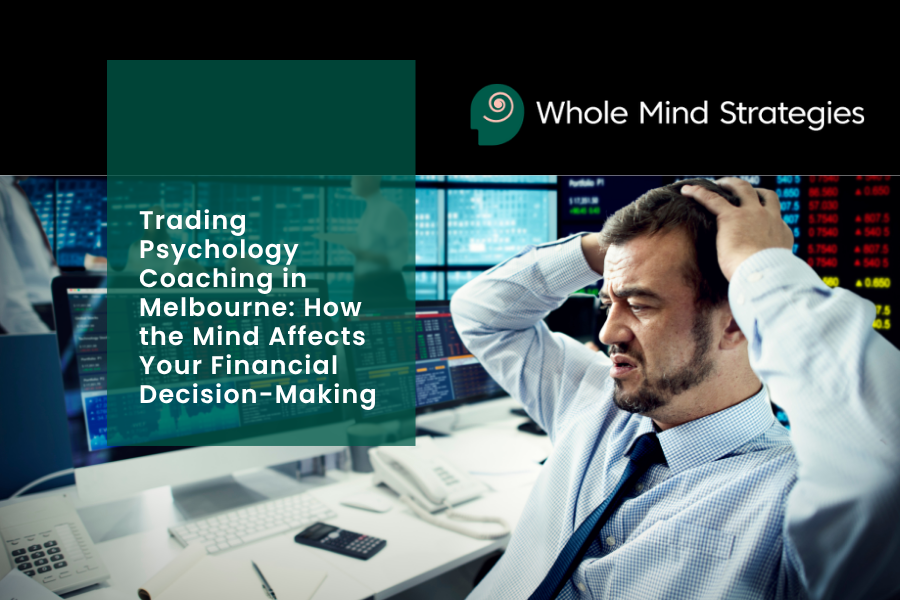
We all start out planning to trade logically. You set your strategy and your risk rules, but the second the market moves against you, all that planning goes out the window. Suddenly you are panicking, moving your stop-loss, chasing losses, or cutting a winning trade way too early. It takes just a split second to completely ruin months of disciplined work.
Success in the markets relies far less on the complexity of your charting software and far more on your subconscious response to stress. This is where trading psychology coaching Melbourne programs become vital. Financial performance is intrinsically linked to emotional regulation.
If you are struggling to maintain discipline despite having a viable technical strategy, understanding the neurological drivers behind your behavior is the key to breaking the cycle. Professional trader performance coaching Dandenong services offer a structured approach to identifying these mental roadblocks, allowing you to build the psychological resilience needed for long-term consistency.
The Neurological Landscape of Financial Risk
To master stock trading psychology, you must understand how your brain processes financial threats. The human brain evolved to prioritize survival, utilizing automated survival mechanisms to navigate danger. While these responses are highly effective when dealing with physical threats, they are incredibly detrimental when applied to modern financial markets.
The Amygdala vs. The Prefrontal Cortex
When a trade begins moving into negative territory, your brain does not register it simply as a fluctuating line on a screen. It interprets financial loss as a genuine threat to your security. This activates the amygdala, the emotional processing center of the brain, triggering a surge of cortisol and adrenaline.
Once the amygdala takes over, your prefrontal cortex, which is responsible for logical reasoning, forward planning, and risk management, temporarily goes offline. In this heightened state, you no longer execute your trading plan. Instead, you react from a place of fear or aggression, leading to catastrophic account drawdowns.
Common Psychological Pitfalls in Modern Trading
Unresolved emotional patterns present themselves in distinct ways on a trading desk. Identifying which of these behaviors dictates your current performance is the first step in successful emotional trading management.
Revenge Trading
After taking a significant loss, the immediate psychological response is often a desire to win the money back from the market. This leads traders to ignore their entry criteria, increase their position sizes excessively, and force low-probability trades. Revenge trading is basically powered by anger, and pride too. It’s kind of a main reason people get account blowouts, like, pretty often.
The Fear of Missing Out (FOMO)
When you watch an asset start moving up real fast and you don’t hold it, scarcity gets triggered in a way that feels urgent. Traders who fall into FOMO typically chase the move, buying right at the top of the trend, right before it flips. A professional trading mindset coach from Melbourne specialist helps you reframe this behavior, teaching you to view missed moves as neutral market data rather than personal failures.
Analysis Paralysis
Conversely, a series of losses can induce severe hesitation. Then, when a real entry setup finally shows up, the memory of earlier pain can make you freeze, and suddenly you’re watching the chart instead of acting. This usually comes from a subconscious need to protect yourself from discomfort. What should be a mechanical execution turns into a messy emotional ordeal, even if you know better in theory.
Rewiring Subconscious Triggers Through Hypnotherapy
Cognitive behavioral strategies can be useful, but plain willpower often isn’t enough when your body is basically flooded with stress hormones. If you want long term changes in how you execute, you have to work on those emotional routines at the subconscious level, the conscious one.
The Subconscious Edge: By using financial psychology hypnotherapy, you can slip into the deeper parts of your mind where the usual, reflex stress patterns are basically kept. When you get into a really relaxed state, you start rewriting how you automatically react to money risk—so that instead of panic you get a steadier calm, more clear-sighted objectivity.
With clinical hypnotherapy, we can also pinpoint the particular core beliefs that are shaping how you act in the market, like scarcity mindsets, or that twisted link between your self worth and how well your financial performance looks. After those constraints are settled, placing a stop-loss no longer feels like some kind of personal humiliation. It just turns into a required, emotionless expense, like a routine price you pay while doing business.
Practical Strategies for Emotional Trading Management
Building a tougher trading psychology tends to mean you need both clinical help and disciplined daily habits. If you follow these professional style protocols, you can better protect your capital, while you slowly build emotional steadiness.
Establish a Pre-Market Routine: Don’t just sit down in front of your monitors and immediately start clicking. Instead, spend about fifteen minutes doing grounding type exercises, or listen to a specialized hypnotherapy recording that lowers your nervous system arousal, before you even review the charts.
Implement a Hard Daily Loss Limit: Define a strict financial threshold where your trading day ends automatically. Once this limit is reached, close your platform entirely. That simple structural wall helps defend you from your own impulses, especially when your emotional fuel is running low.
Maintain a Psychological Journal: Along with writing your entry prices and noting the technical conditions, track your exact emotional state during execution. If you record your anxiety level, the physical tension, and the exact thought stream, you can catch your personal behavioral triggers earlier, before they show up as expensive errors.
Frequently Asked Questions
What exactly is trading psychology coaching Melbourne?
This is a specialized, professional program designed to identify and resolve the subconscious behavioral patterns that disrupt your financial discipline. Rather than focusing on technical charting setups, these coaching targets your emotional responses to risk, helping you eliminate impulsive mistakes, revenge trading, and execution paralysis.
How does financial psychology hypnotherapy differ from standard mindset coaching?
Standard coaching operates on a conscious level, relying heavily on willpower and logic to modify your behavior. Hypnotherapy directly accesses the subconscious mind where your automatic stress and fear responses originate. By resolving these deep-seated emotional patterns at their source, calm and disciplined execution becomes natural.
Why do I struggle to follow my trading plan even though I know it works?
When the market moves rapidly against your position, your emotional brain perceives financial loss as an immediate threat to your survival. This shifts your nervous system into fight-or-flight mode, overriding your logical prefrontal cortex. Without specific psychological conditioning, your brain will choose self-preservation over statistical data.
Can trader performance coaching Dandenong help an experienced trader?
Yes, psychological barriers affect market participants at every tier of experience. While novice traders struggle with basic rule adherence, experienced operators frequently seek coaching to handle the unique psychological pressures of scaling up their position sizes, overcoming extended performance drawdowns, or managing significant capital allocations.
How long does it take to see tangible improvements in my trading psychology?
While initial cognitive awareness can occur quickly, breaking deep-seated subconscious habits typically requires a structured approach over several weeks. Most traders note a substantial reduction in their execution of anxiety and a marked improvement in rule consistency within four to six weeks of dedicated coaching and hypnotherapy.
Will mastering my mindset guarantee that my trading account is consistently profitable?
Mindset coaching is designed to ensure you can execute your chosen strategy with flawless, emotionless consistency. It bridges the gap between your analytical knowledge and your actual performance. However, long-term profitability still requires that your underlying technical or fundamental strategies possess a genuine statistical edge in the markets.
Master Your Subconscious Performance
Achieving long-term consistency in the financial markets requires far more than technical data. To thrive in high-stress trading environments, you must cultivate a subconscious framework that remains perfectly calm under pressure.
At Whole Mind Strategies, we utilize nearly twenty years of specialized psychotherapy and clinical hypnotherapy experience to help you uncover and eliminate the mental blocks sabotaging your growth. Led by Anthony Gilmour, our tailored programs help you move past impulsive biases, master your emotional baseline, and execute your strategy with absolute clarity.
Contact our clinic today to book a comprehensive consultation and take complete control of your financial decision-making process.